Winning the Third Wave of Retail Intelligence
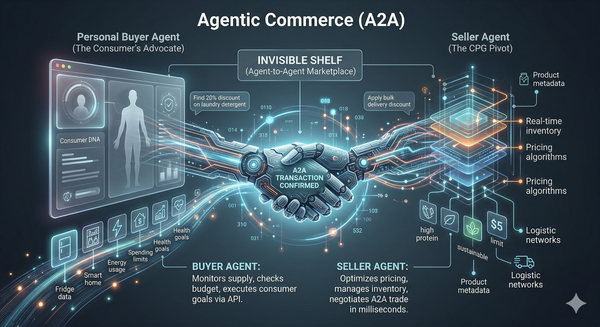
The retail goalposts have moved from the floor to autonomous logic. Is your organization still managing historical receipts, or are you architecting for the Invisible Shelf? Use this three-wave framework to assess where you sit on the continuum and how to bridge the gap to the agentic era.

Executive Summary
The retail industry is currently undergoing its third major transformation of the 21st century. This evolution is not merely about new technology; it is about a fundamental shift in Retail Intelligence—the logic that governs how brands and retailers connect with consumers.
For the modern CPG steward, the challenge is no longer about having more data; it is about moving past the legacy habits of the previous two waves to survive in an autonomous market. If your brand’s logic isn't architected into the agentic ecosystem, you don't just lose the shelf—you lose the consumer before they even realize they have a need.
The Three-Wave Retail Intelligence Continuum
Wave 1: The Era of Physical Dominance (2000s–2012)
The Intelligence: Data as a Historical Record.
The Focus: Managing Physics. Success meant winning the battle for the floor, securing the best linear feet, and ensuring the shopper stumbled upon the product in a physical aisle.
Wave 2: The Digital Fragmentation (2013–2024)
The Intelligence: Data as a Digital Footprint.
The Focus: Managing Pixels. Growth moved to the search bar and the Retail Media Network. Success required "mining" diagnostic insights to justify ad spend and capture search share.
Wave 3: The Agentic Evolution (2025–Future)
The Intelligence: Data as an Executable Protocol.
The Focus: Managing Logic. We have entered a world of the Invisible Shelf, where autonomous agents handle the labor of shopping. Success now requires architecting the business rules that enable AI to automatically choose your brand.
Are You Stuck in the Past?
The most significant risk facing CPG and retail organizations today is an Intelligence Gap. Many companies are still operating with a Wave 1 or Wave 2 mindset, even though the market has already moved to Wave 3.
If you are still manually cleaning spreadsheets to win more shelf space, you are trapped in Wave 1. You are managing for a physical world that is increasingly being bypassed.
If you are focused on "mining" data to build better PowerPoints for JBP meetings, you are plateauing in Wave 2. While you are digital, your processes are too manual and reactive for the speed of modern commerce.
To thrive in Wave 3, you must become a Commercial Architect. You must move from telling stories about data to building the logic engines that govern your brand's presence in an agentic ecosystem.
The Final Verdict
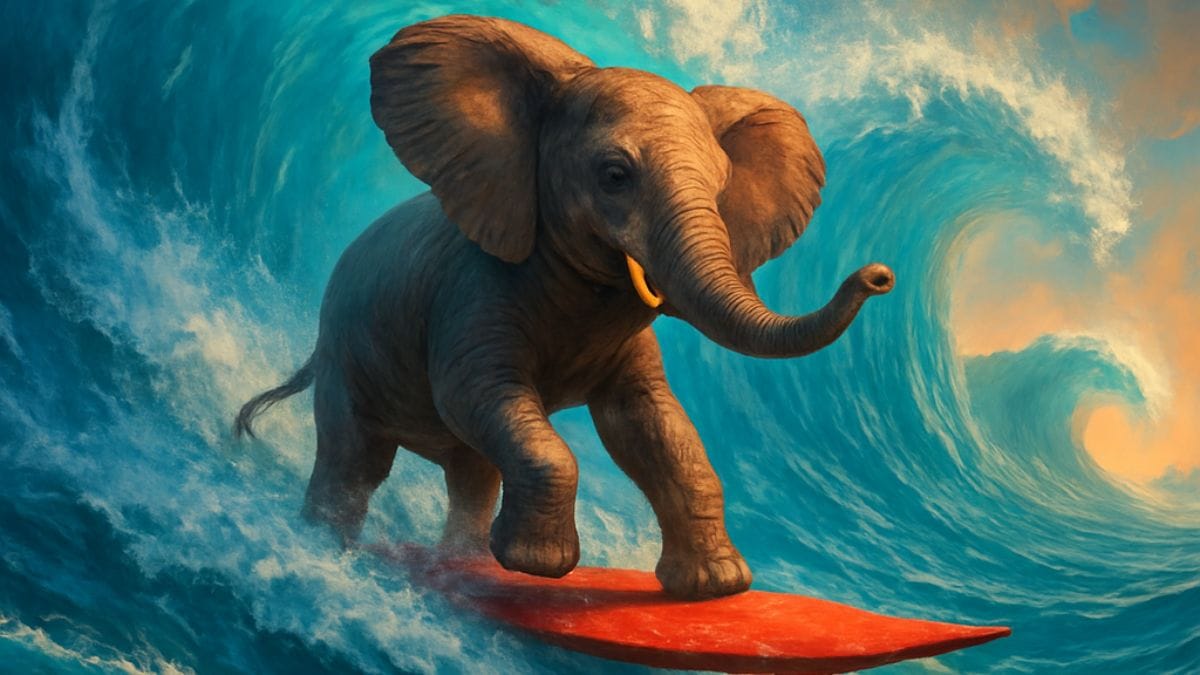
In Wave 1, we managed shelves. In Wave 2, we managed screens. In Wave 3, we must manage the logic. The "Elephant on the Shelf" is the realization that the era of manual data "spoon-feeding" is over. If your brand’s logic isn't architected into the agentic ecosystem, you don't just lose the shelf—you lose the consumer before they even realize they had a need.
READ FULL ARTICLE BELOW
Wave 1: The Era of Physical Dominance (2000s–2012)
At the turn of the century, retail evolved from localized trade into a standardized global science. This era was defined by the modernization of the 40,000-square-foot physical environment, where growth was primarily driven by physical presence. Category leadership was determined by a brand's ability to master the physics of the store, ensuring dominance over high-traffic perimeter zones and aisle entry points.
Retail Intelligence: Data as a Historical Record
The technology of this era was defined by the industrialization of the factual receipt—using lagging indicators to standardize decision-making across massive retail footprints. Data moved from ledger books into centralized databases, allowing teams to project future volume based on scientific analysis of past performance.
Tech: Standardized Point-of-Sale (POS) systems and basic relational databases (Excel/Access) became the primary tools for retail intelligence.
Analytics: This period marked the formal birth of the Shopper Insights discipline, shifting focus from internal shipment metrics to external consumer consumption patterns.
Logic: Data served as a negotiation chip. It provided the objective proof required to justify larger shelf footprints or exclusive display rights during Joint Business Planning.
The Manifestation: A Standardized Operating Model
1. The Shopper: The Physical Navigator
The shopper's journey was linear and dictated by the store's architecture. Discovery was not an intentional search but a physical encounter. Consumers acted as hunter-gatherers within the four walls of the store, making tactile decisions based on immediate visibility and eye-level accessibility. Strategic placement ensured shoppers encountered products at high-conversion points along their natural walking path.
2. The CPG Manufacturer: The Volume Architect
For the manufacturer, success required massive trade spend and flawless execution at the store level. Account Managers functioned as Volume Architects, utilizing Joint Business Planning to align with retailers on volume and margin targets. Intelligence was used to win the battle for real estate, ensuring the brand was physically present where shoppers were most likely to engage.
3. The Retailer: The Real Estate Sovereign
The retailer acted as the sovereign gatekeeper for consumers. Their primary value proposition was the management of high-value real estate. As technology standardized inventory management, retailers demanded greater institutional support from CPG partners to maintain category health. They focused on optimizing the slot, ensuring every inch of the physical floor generated a maximum return on investment.
Synthesis: People & Physics
Leadership in this inaugural wave of modernization was defined by the ability to manage people and physics. Relationships remained the currency of the industry, but they were now backed by the first generation of scalable data. While technology served as a back-office support system for supply chain and accounting, the actual commercial win was achieved through manual coordination of field teams and strategic negotiation of the physical floor.
Retail Intelligence Check: Does your organization still treat data primarily as a historical receipt to win more floor space, or have you evolved your intelligence to handle the digital fragmentation and agentic logic of the modern era?
Wave 2: The Digital Fragmentation (2013–2024)
As the industry moved into the second decade of the century, the industrialization of retail intelligence underwent a seismic shift. The primary engine of growth moved from the physical architecture of the aisle to the digital architecture of the search bar. The walls of the traditional retail store became porous as mobile technology and the accessibility of vast online inventories allowed shoppers to bypass traditional physical gatekeepers.
Retail Intelligence: Data as a Digital Footprint
The technology of this era was defined by the arrival of cloud computing, massive data sets, and the digitization of consumer loyalty. Data evolved from a historical record into a continuous digital trail of intent. For the first time, intelligence was not just about what happened at the register; it was about the specific path taken to get there.
Tech: The rise of cloud platforms like Snowflake and AWS allowed for the storage and mining of massive datasets that were previously too large to process.
Analytics: Intelligence shifted from volume reporting to diagnostic mining and multi-touch attribution. By correlating disparate data points—such as clickstreams, loyalty behavior, and digital ad exposure—analytics moved beyond knowing what was sold to understanding the specific digital drivers that influenced the purchase.
Logic: Data became a diagnostic tool. It was used to identify specific patterns that could justify a multi-channel marketing spend or a highly targeted digital promotion.
The Manifestation: A New Operating Model
1. The Shopper: The Intent-Based Searcher
The shopper transitioned from a physical navigator into a searcher driven by specific intent. Discovery moved from physical encounters in a store aisle to a digital query. The path to purchase became nonlinear—shoppers began researching products on their phones while standing in stores, making decisions based on digital reviews and real-time price transparency.
2. The CPG Manufacturer: The Era of Digital Mining
For the manufacturer, success moved from managing physical volume to performance marketing and omnichannel orchestration. The role of the account manager became a data-led partnership where joint business planning focused on digital share of voice and return on advertising spend. Success required becoming a digital miner—analyzing high-velocity data to find the precise levers that could move the needle in a fragmented market.
3. The Retailer: The Retail Media Network
The retailer’s role evolved from a real estate manager to a media publisher. Retailers realized that their first-party data and digital search results were often more valuable than their physical lobby displays. They focused on building closed-loop attribution models to prove to CPG partners that a specific digital advertisement led directly to a purchase. The retailer became the curator of the digital shelf.
Synthesis: Pixels & Precision
Leadership in this wave was defined by the ability to manage pixels and precision. Success was about sourcing the right insight from a mountain of data. However, while the technology was advanced, the process remained heavily manual. Human analysts were still required to bridge the gap between different data silos to construct a cohesive business story.
Retail Intelligence Check: Is your organization still spending the majority of its time mining for diagnostic insights to justify past performance, or are you beginning to architect the autonomous logic required for the next evolution?
The Strategic Synthesis of Wave 3: Systems & Logic
In this final era, the industrialization of retail intelligence moves beyond human-led discovery. We have transitioned from a world where humans search for products to a world where Autonomous Agents manage the interface between the brand and the consumer. The concept of the shelf is no longer physical or digital; it is invisible, integrated into the background of daily life through predictive logic and automated replenishment.
Retail Intelligence: Data as an Executable Protocol
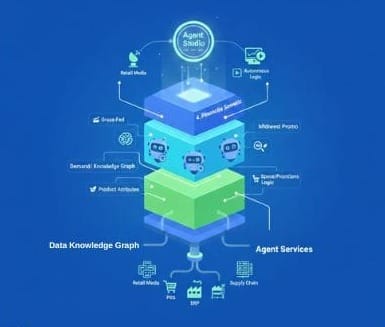
The technology of Wave 3 is defined by the maturation of Agentic AI, large-scale vector databases, and real-time API connectivity. Data has evolved from a digital footprint of the past into a live, executable protocol. Intelligence is no longer something to be mined for a story; it is something streamed into a decision engine for instant action.
Tech: Systems move from simple cloud storage to reasoning engines (Agents) that can execute complex commercial tasks across the retail ecosystem.
Analytics: Analytics has shifted from diagnostic mining to autonomous reasoning. Rather than analyzing data to tell a story of the past, intelligence now powers automated triggers and conversational interfaces that execute commercial decisions in real time.
The Logic: Intelligence is driven by Continuous Intent Signals. Personal agents communicate with retail agents to address household needs—such as budget management or health goals—before a manual search is ever conducted.
The Manifestation: The Autonomous Operating Model
1. The Shopper: The Passive Beneficiary
The shopper has transitioned from an active searcher into a passive beneficiary of a delegated system. Discovery is no longer an intentional act but a result of Frictionless Delegation. The shopper trusts their personal AI to handle the labor of shopping, intervening only for high-emotion purchases or discovery moments. Consumption happens automatically based on pre-defined preferences and real-time inventory levels.
2. The CPG Manufacturer: The Commercial Architect
For the manufacturer, success shifts from digital mining to Commercial Architecture. Leadership must encode business logic—such as pricing floors, substitution hierarchies, and nutritional standards—directly into the systems that agents use to make decisions. The goal is no longer to market to a person, but to architect a protocol that ensures the brand is the logical solution for the agent’s query.
3. The Retailer: The Predictive Logistic Utility
The retailer’s value proposition has moved beyond media into Predictive Logistics. Success depends on the accuracy of real-time inventory and ultimately, the seamlessness of fulfillment through autonomous delivery fleets. The retailer’s role is to ensure the "Agentic Promise" is fulfilled with zero latency. They have become high-speed nodes in an autonomous network, moving from a destination to a background utility.
Synthesis: Systems & Logic
Leadership in Wave 3 is defined by the ability to manage systems and logic. Success is no longer achieved by "spoon-feeding" information to individuals or mining historical data for trends. Instead, it requires building the ecosystem-led growth models that allow a brand to live within the autonomous infrastructure of the future. The competitive advantage belongs to those who own the logic of the invisible shelf.
Retail Intelligence Check: Is your organization still hiring miners to find stories in old data, or are you recruiting architects to build the logic that will govern your brand’s presence in the autonomous market?
Conclusion:
In Wave 1, we managed shelves. In Wave 2, we managed screens. In Wave 3, we must manage the logic. The "Elephant on the Shelf" is the realization that the old manual ways of "Spoon-Feeding" data are dead. If your brand’s logic isn't architected into the agentic ecosystem, you don't just lose the shelf—you lose the consumer before they even know they need you.
The Wave 3 Readiness Assessment
To determine if your organization is architected for the Agentic Evolution, evaluate where your current operations sit across these four critical pillars.
1. Data Velocity & Integration
Wave 1 (The Historian): Your data is siloed in spreadsheets. You spend more time "cleaning" data than using it. Your insights are reactive, based on last month's POS.
Wave 2 (The Diagnostic): You have a Cloud Data Warehouse (Snowflake/AWS) and clean dashboards. You can see what is happening in near real-time, but a human still has to "log in" to make a decision.
Wave 3 (The Architect): Your data is a Live Stream. It is integrated via APIs into external retail ecosystems. Decisions (such as price adjustments or inventory shifts) are made programmatically without human intervention.
2. Analytical Talent & Skill Sets
Wave 1 (The Gatherer): Your team's value is based on their ability to manually build reports and navigate retail portals.
Wave 2 (The Miner): You have Data Scientists who "dig" through big data to find stories for Joint Business Planning (JBP) meetings.
Wave 3 (The Systems Engineer): Your team consists of Commercial Architects. They don't build reports; they build Logic Engines and "Business Rules" that tell AI agents how to represent your brand.
3. Retailer Relationship Dynamics
Wave 1 (The Tenant): You negotiate for "linear feet." Success is a better "slot" on the physical shelf.
Wave 2 (The Advertiser): You negotiate for "Search Share." Success is a high Return on Ad Spend (ROAS) on a Retail Media Network.
Wave 3 (The Integrated Partner): You negotiate for "Algorithmic Preference." Success is having your brand’s logic embedded in the retailer’s autonomous replenishment system (e.g., Walmart/Gemini).
4. Consumer Path-to-Purchase Logic
Wave 1 (The Stumble): You hope the shopper sees your end cap as they walk the perimeter.
Wave 2 (The Search): You hope the shopper types your keyword into a search bar.
Wave 3 (The Delegation): You ensure the shopper’s personal AI agent chooses you automatically because you satisfy the consumer's pre-set "Protocol" (e.g., Organic + Under $5 + In-Stock).